Light is the difference between a portrait and a picture of a face. It's also the part of an AI prompt most people leave to chance, with a line like “beautiful lighting” that the model reads as “bright and even”. The result is flat skin, no shadow, no shape.
Portrait photographers have named their lighting setups for a century, and the models learned those names. Use them and you get shape, mood and direction instead of a well-lit blur.
The rule: say where the light comes from
Every lighting phrase should answer three things.
- Direction: from the left, from above, from behind.
- Quality: soft or hard.
- Colour: warm, cool, neutral, or a specific source like neon.
Soft window light from the left answers all three in five words. That is the standard to aim for.
The ten setups
1. Window light
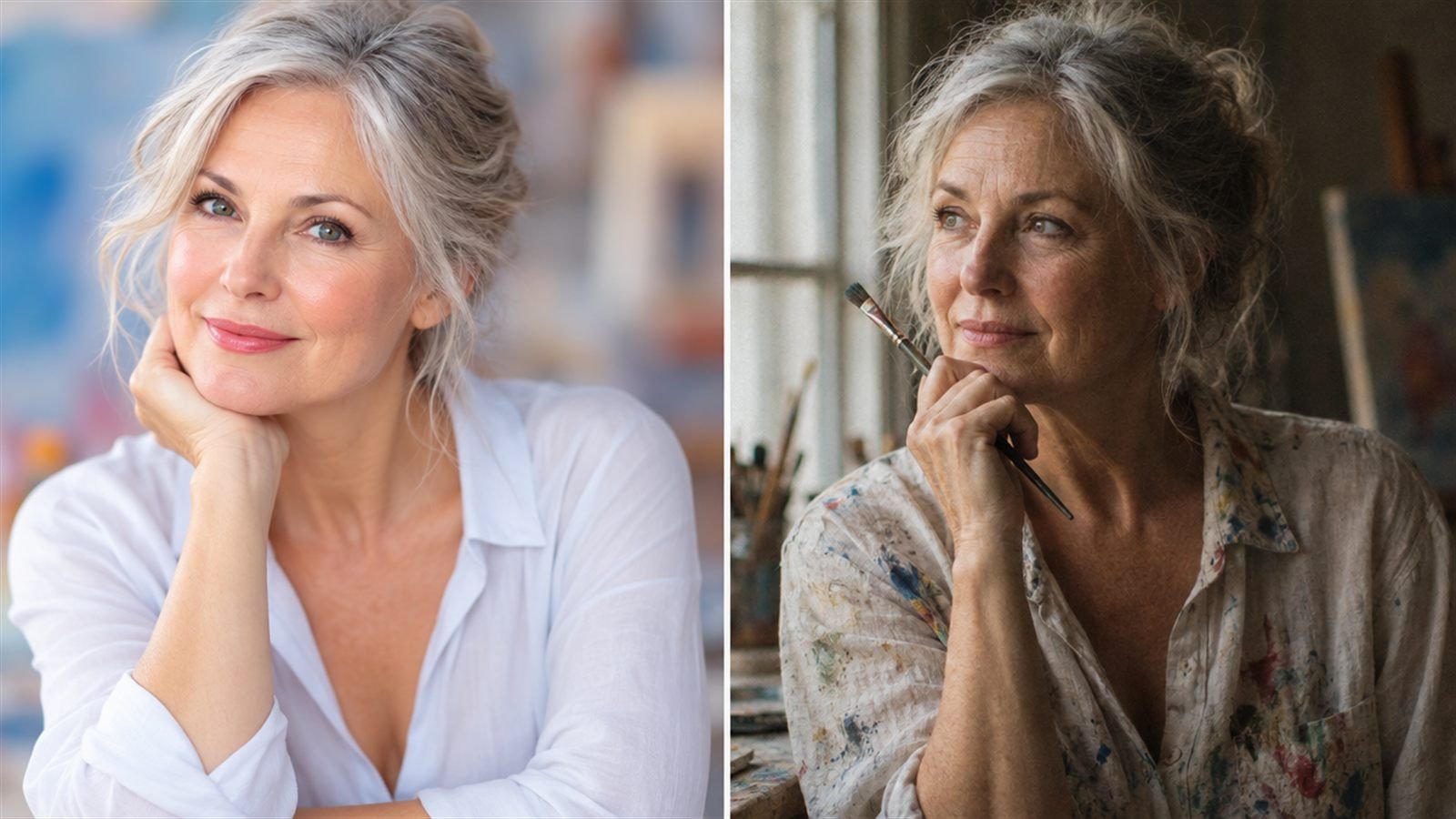
Soft, directional daylight from one side. The most natural-looking portrait light there is. Add deep shadow on the far side of the face if you want drama, white wall fill if you want it gentle.
2. Rembrandt lighting
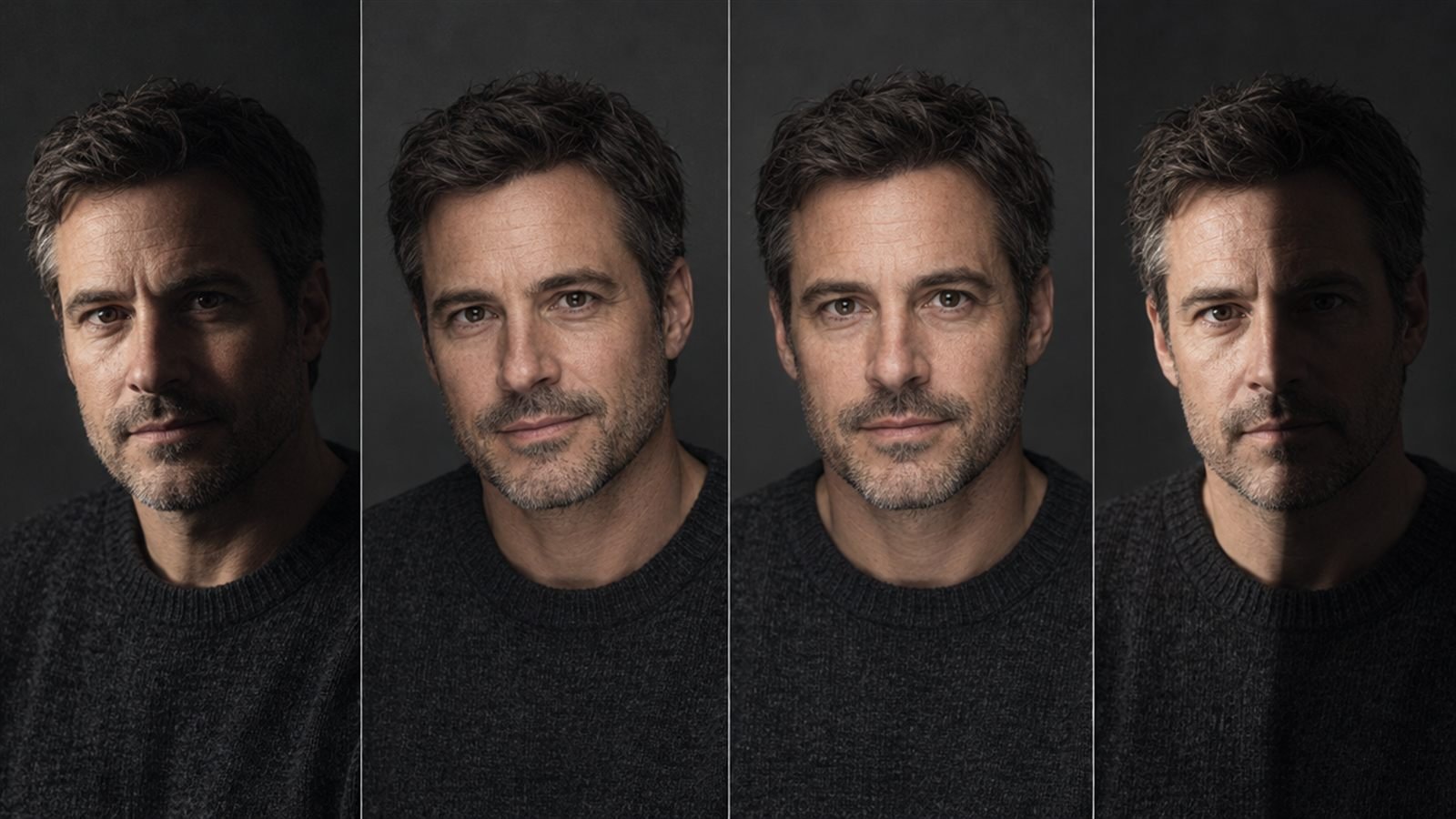
Key light high and to one side, leaving a small triangle of light on the shadowed cheek. Classic, painterly, serious. Good for character portraits and older faces.
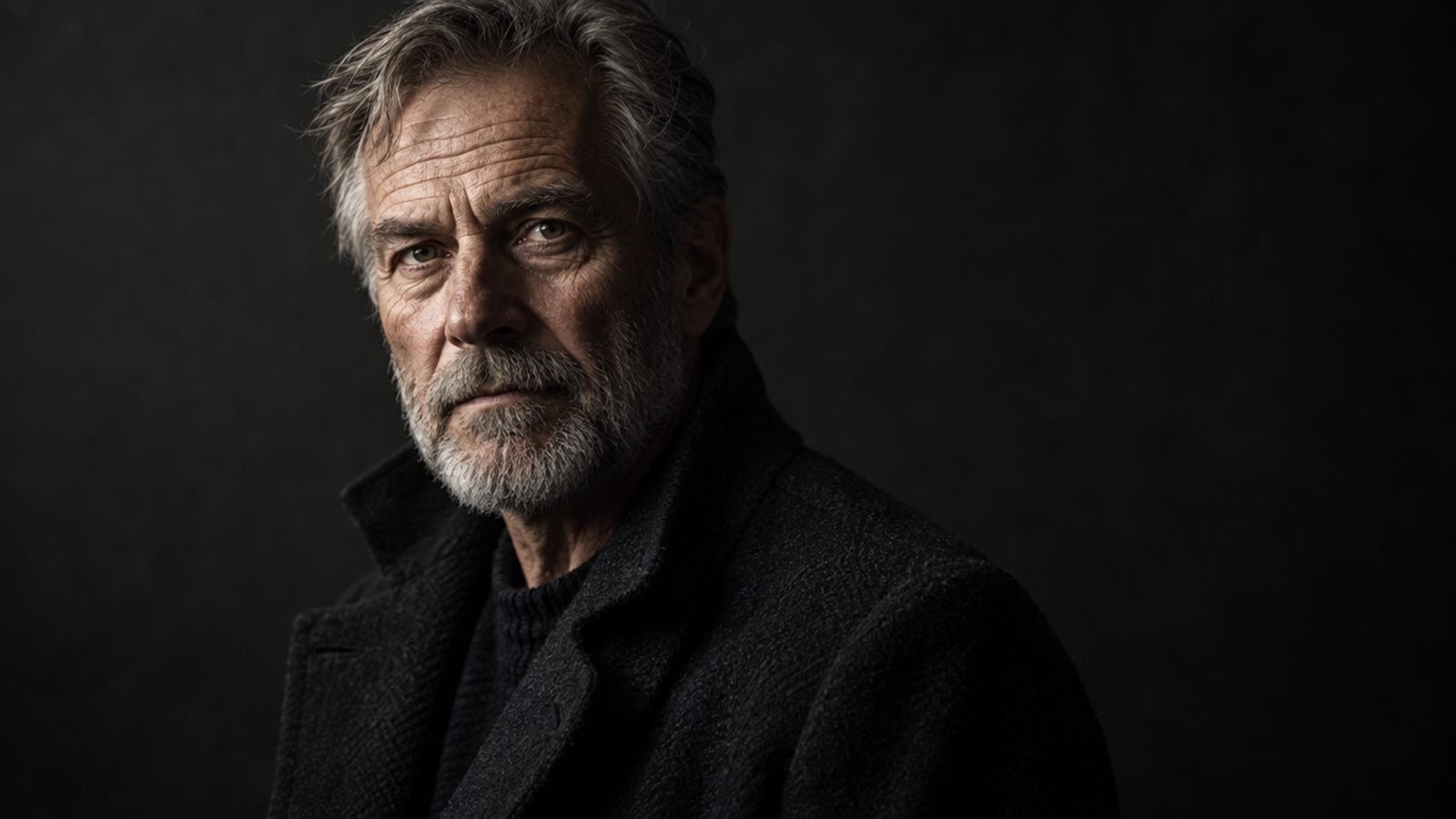
The prompt behind this image:
3. Loop lighting
The light slightly to the side and above, casting a small shadow of the nose down toward the cheek. The flattering everyday studio setup. Use it when you want a face to look good without looking dramatic.
4. Butterfly lighting
Light straight in front and above, creating a small butterfly-shaped shadow under the nose. Glamour and beauty. Pairs naturally with a beauty dish.
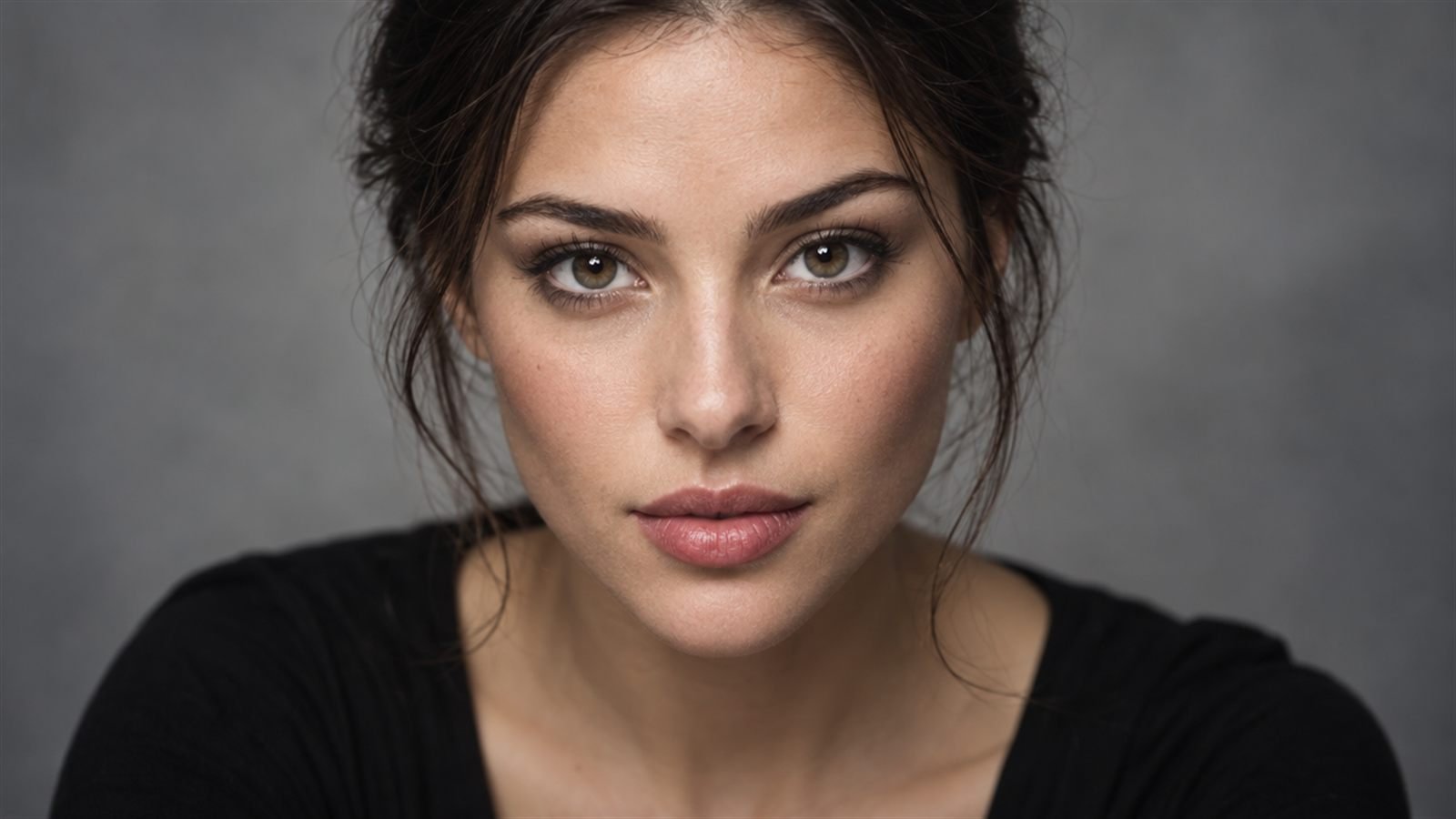
The prompt behind this image:
5. Split lighting
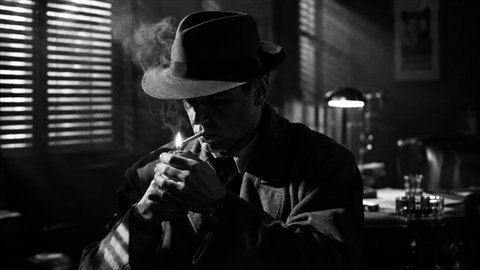
Light directly from one side, so exactly half the face is lit and half is in shadow. Tense, mysterious, cinematic. Great for thrillers and moody editorials.
6. Rim light or backlight
Light from behind the subject, outlining hair and shoulders with a bright edge. Adds separation from a dark background. Combine with a soft front light, or go full silhouette.
7. Clamshell lighting
One light above and one below, like an open shell. Even, bright, almost shadowless beauty light. Cosmetics ads, skincare, headshots.
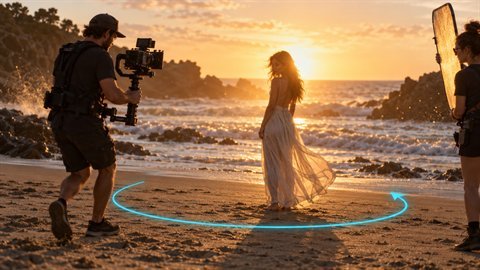
8. Golden hour
Low warm sun, long soft shadows, glowing edges on hair. The most requested light on the internet for a reason. Say low sun behind the subject for a halo, low sun from the side for warmth on the face.
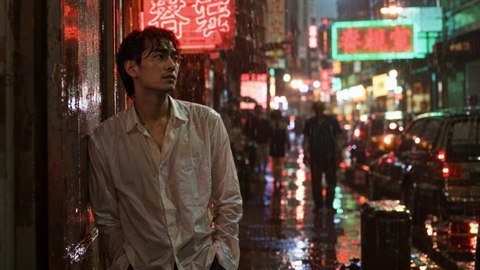
9. Neon and practical light
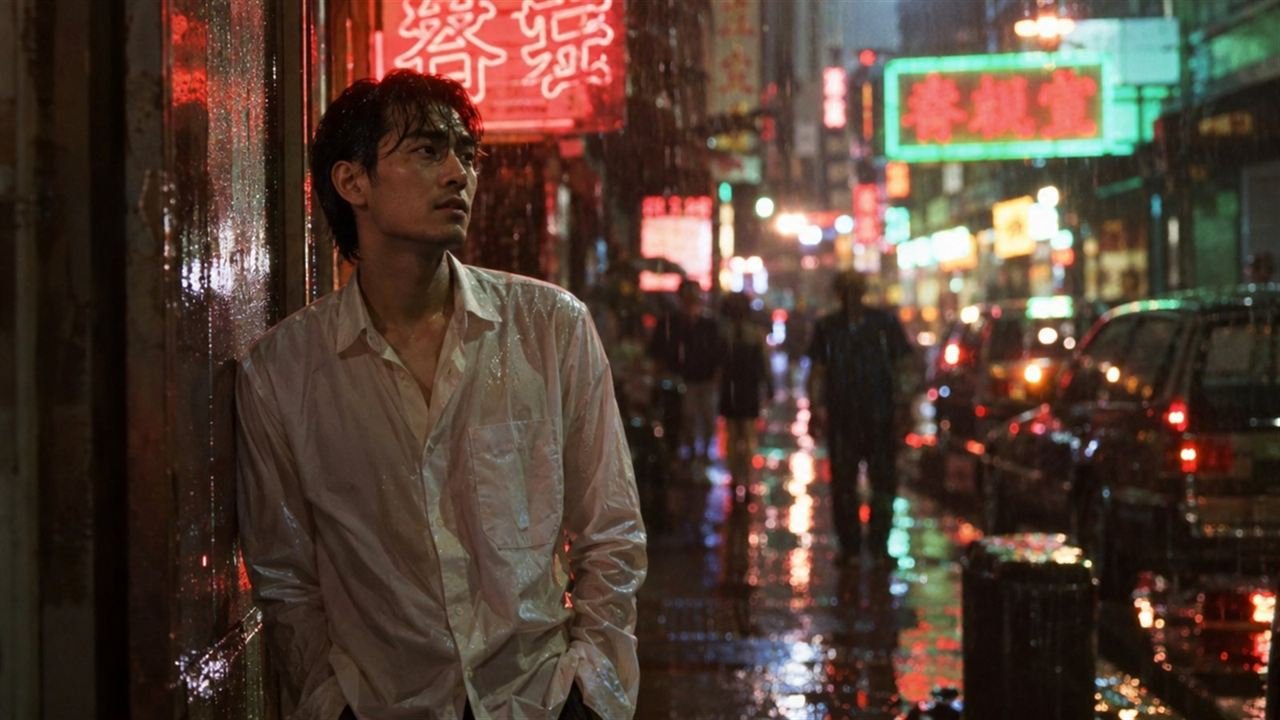
Light that comes from things in the scene: neon signs, screens, street lamps. Coloured, mixed, urban. Name the colours.
10. Candlelight
A tiny warm source close to the face, deep darkness everywhere else. Intimate and painterly. Works beautifully with a fast lens and grainy film.
Frame Juice Image has light patterns and modifiers as one-click settings, so you can combine golden hour with a rim light, or butterfly lighting with a beauty dish, without guessing the wording. The free version is a good place to start.
Modifiers: the tool that shapes the light
A modifier changes the quality of a studio light, and models respond to the names.
- Beauty dish: crisp but flattering, a bright catchlight in the eyes. Beauty and fashion.
- Octabox: large, soft, round catchlight. Gentle portraits.
- Strip box: a narrow slice of light, great for rim lighting and edges.
- Bare bulb: hard light and sharp shadows. Raw, editorial, flash-snapshot energy.
- Fresnel spot: a focused, theatrical pool of light. Old Hollywood.
- Colour gels: coloured light, for example a red gel from behind and a blue gel in front.
Pair a modifier with a pattern: butterfly lighting with a beauty dish, or rim light from a strip box behind the subject.
Time of day for outdoor portraits
Outdoors, the time of day is the lighting setup.
- Golden hour: warm, low, long shadows.
- Blue hour: cool, soft, after sunset, city lights just coming on.
- Overcast: a giant softbox in the sky. Gentle skin, low contrast, no harsh shadows.
- Midday sun: hard overhead light, dark eye sockets. Use it on purpose for a raw, bleached summer look, or avoid it.
Mistakes that flatten a portrait
Asking for “perfect lighting”. The model reads it as even and bright, which removes all shape. If your faces already look too smooth, our guide to why AI portraits look plastic covers the other half of the problem.
Stacking setups. Rembrandt plus butterfly plus split is three different key light positions. Pick one pattern and one modifier.
Forgetting the shadows. Shadows are what make light visible. If you want drama, ask for them: deep shadow on the right side of the face.
Mismatching light and film. Tungsten night stocks want night light. Bright slide film wants sun. Our film stock guide covers which pairs work.