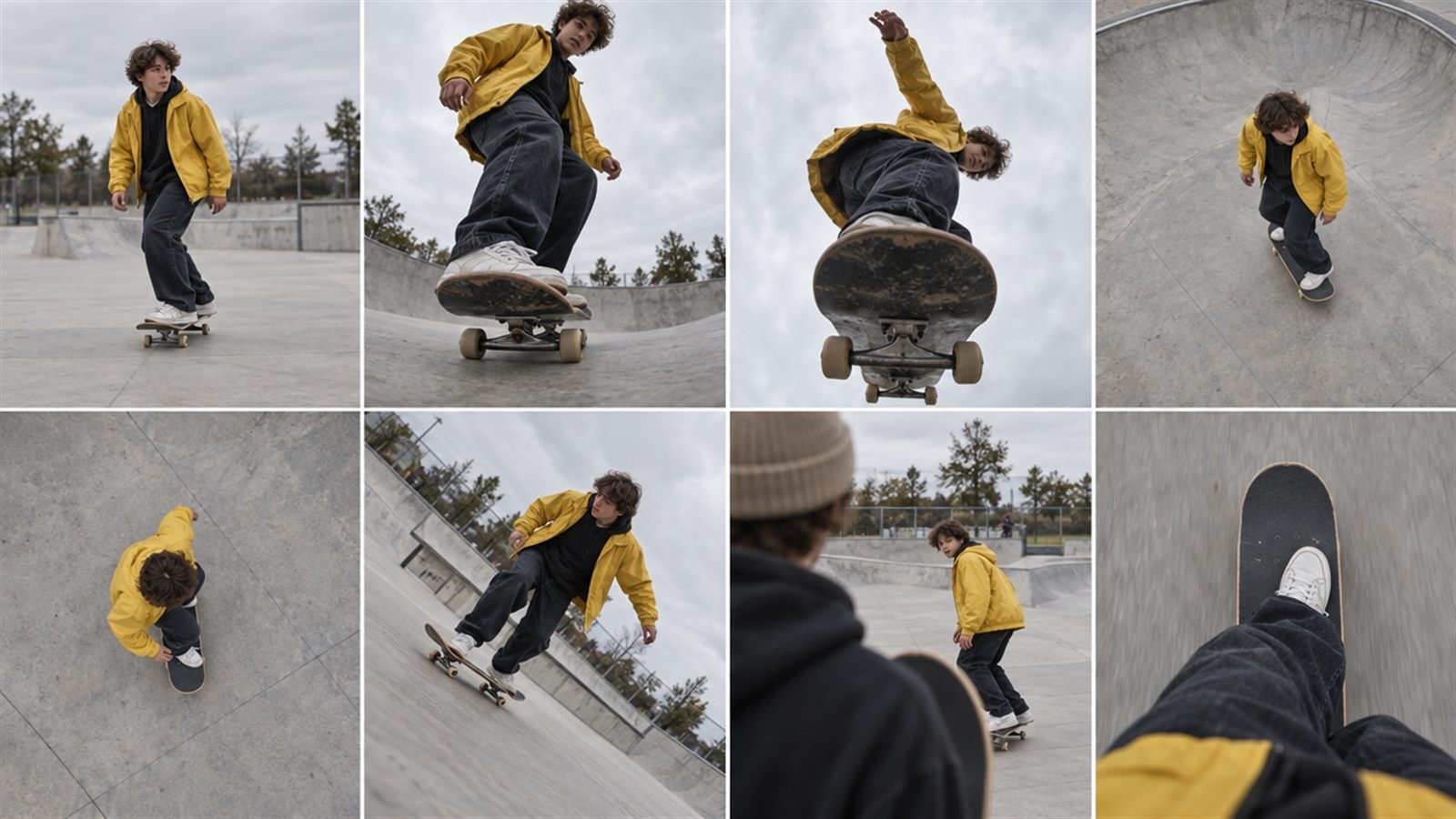
Where the camera stands is a story decision. Look up at someone and they become powerful. Look down and they become small. Get close and it's about feeling, pull back and it's about place. Leave angle and distance out of your prompt and the model picks for you, usually a safe eye-level medium shot, every single time.
Here's the vocabulary, and when to use each word.
The eight camera angles
Eye level. The camera at the subject's eye height. Neutral, honest, relatable. The default for a reason, but it rarely surprises.
Low angle. Camera below, looking up. Power, heroism, confidence, sometimes threat. Great for athletes, leaders, villains and architecture.
Worm's eye view. Extreme low angle, almost at the ground looking straight up. Monumental and dramatic. Skyscrapers, towering figures, trees.
High angle. Camera above, looking down. Vulnerability, smallness, being watched. Also useful for showing a layout or a crowd.
Bird's eye view. Straight down from above. Graphic, map-like, often abstract. Flat lays, swimming pools, city grids, a person lying in the grass.
Dutch tilt. The camera rolled so the horizon slants. Unease, disorientation, energy. Use it sparingly or it becomes a gimmick.
Over the shoulder. Framed past one person toward another. Conversation, relationship, tension. Instantly cinematic.
POV. What the subject sees: hands on a steering wheel, feet on a cliff edge, a view through a window. Immersive and personal.
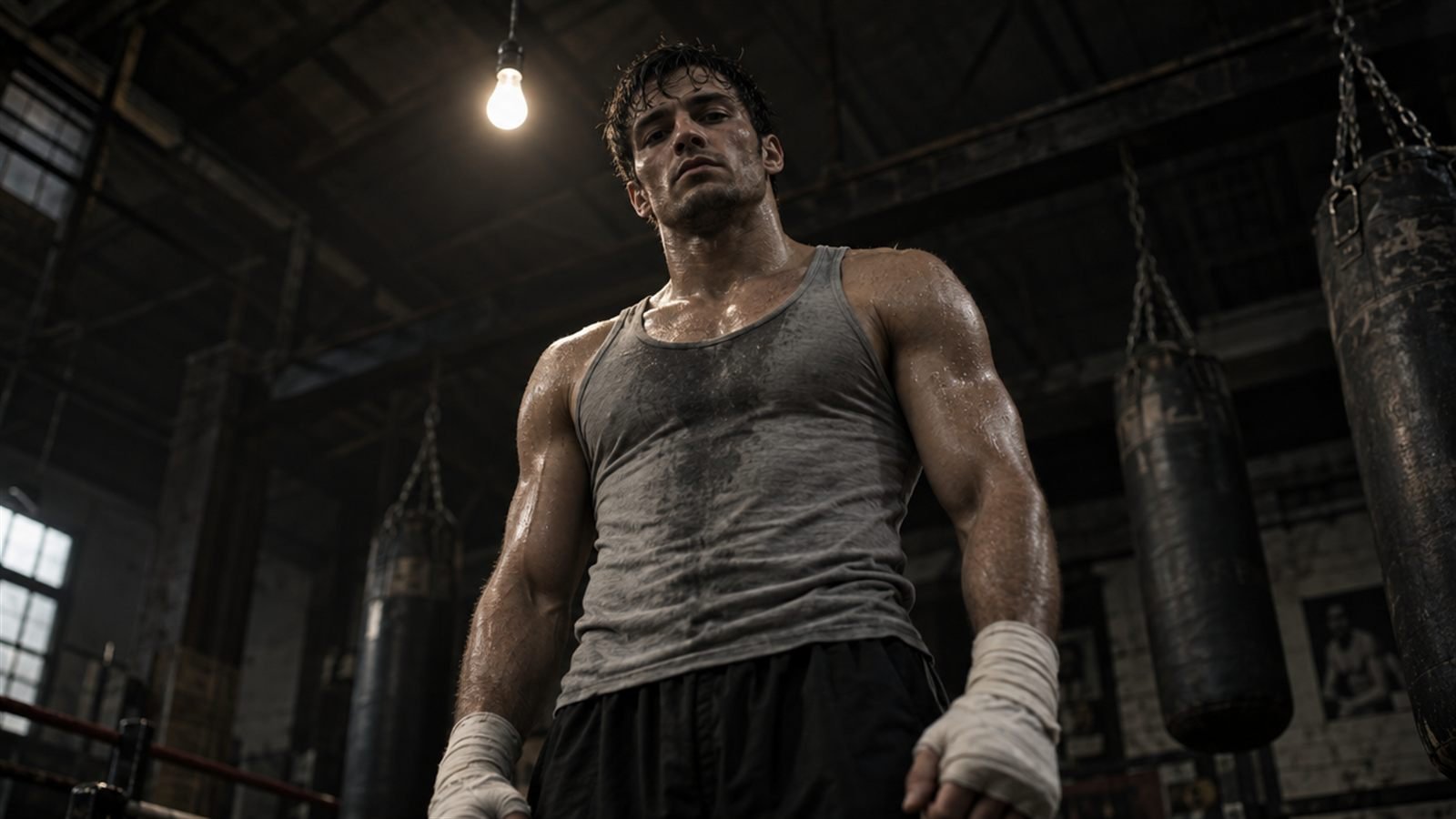
The prompt behind this image:
The seven shot sizes
Extreme close-up. A single detail: an eye, lips, a hand on a door handle. Pure intensity.
Close-up. The face fills the frame. Emotion first.
Medium close-up. Head and shoulders. The classic interview and portrait framing.
Medium shot. Waist up. Body language plus expression. Good for people doing things.
Full body. Head to toe. Fashion, dance, posture, outfits.
Wide shot. The person in their environment. Setting matters as much as the subject.
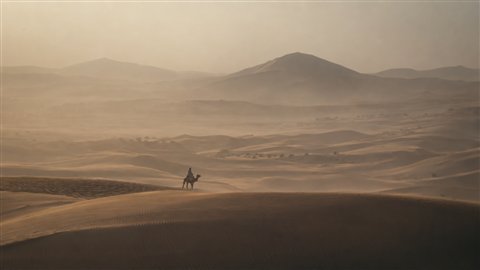
Extreme wide. A tiny figure in a huge landscape. Scale, isolation, epic.
Frame Juice Image has shot size, camera angle and composition as settings you can combine in seconds, formatted for the image AI you use. Start with the free version.
Combining angle and size
The two work together. Always name both.
- Close-up + low angle: a heroic, determined face.
- Wide shot + high angle: a lonely figure crossing an empty square.
- Full body + worm's eye: a fashion shot with enormous legs and sky.
- Medium shot + over the shoulder: a tense conversation.
- Extreme wide + bird's eye: a single red umbrella in a grey city grid.
A simple habit: write shot size first, angle second.
Composition: where things sit in the frame
Once you've chosen distance and angle, decide the arrangement.
Rule of thirds. Subject off-centre on an imaginary grid line. Natural and balanced.
Centred. Subject dead centre. Formal, symmetrical, confrontational. Works beautifully with symmetrical architecture.
Leading lines. Roads, rails, corridors or shadows pulling the eye toward the subject.
Frame in frame. The subject seen through a doorway, window or arch.
Negative space. Lots of empty area around a small subject. Calm, minimal, and very useful if you need room for text.
Diagonal. The main shapes cutting across the frame corner to corner. Movement and energy.
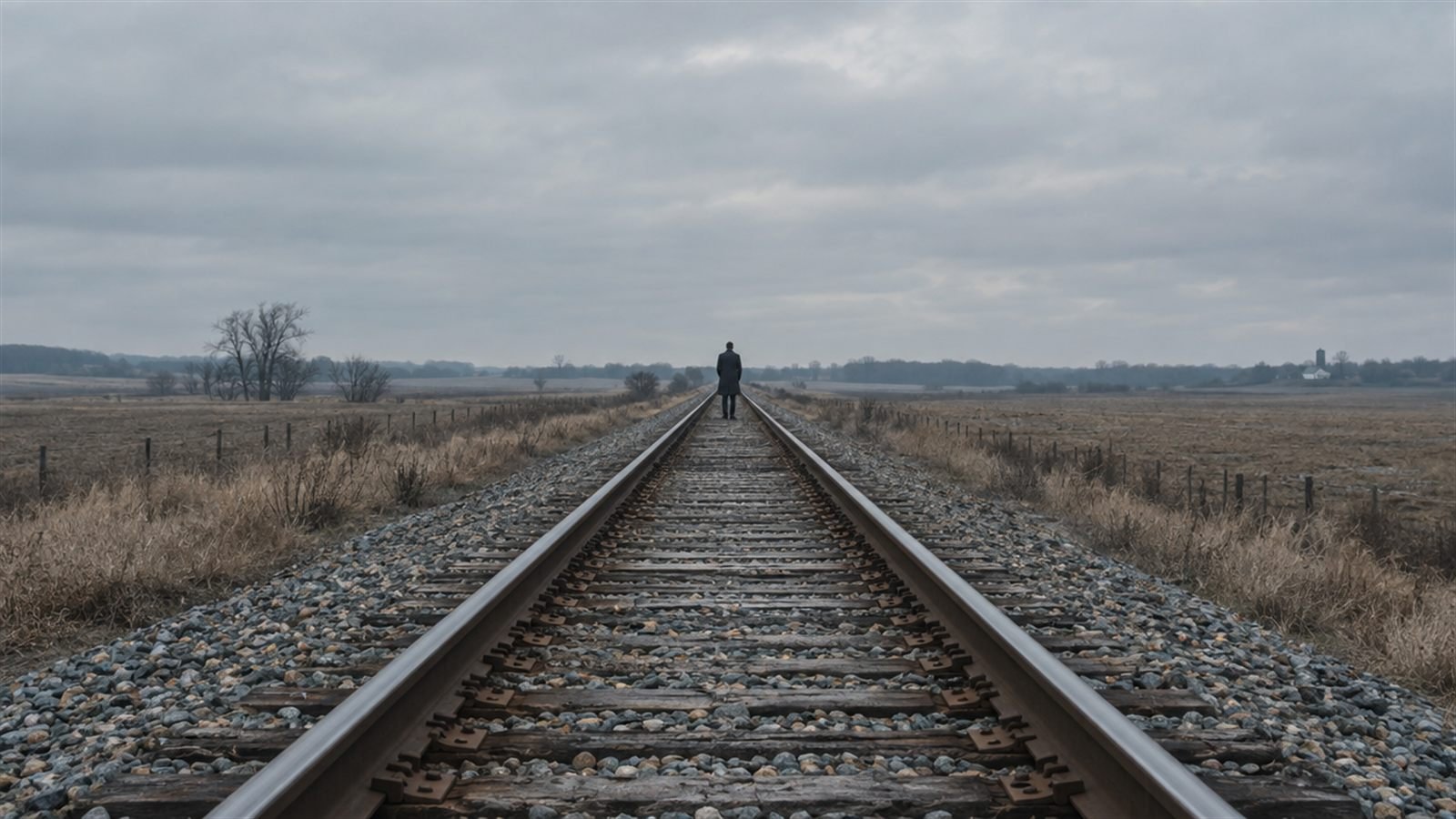
The prompt behind this image:
Mistakes to avoid
Contradicting yourself. “Extreme close-up of a woman standing in a vast desert” can't show both. Choose the shot the story needs.
Angle without a reason. A dutch tilt on a calm breakfast scene just looks wrong. Match the angle to the emotion.
Forgetting the lens. Low angles look stronger with wider lenses. Compressed close-ups want longer ones, like an 85mm. Angle, lens and light are decisions that work together, which our cinematic prompt guide walks through.
Treating video the same way. In a still, the camera stands in one place. In AI video, it can also move. That's a different set of words, covered in our guide to camera moves for AI video.
Change nothing but the angle and shot size in your next prompt, and watch how different the same idea becomes.